News
28/05/2026
Creating environments for people to thrive
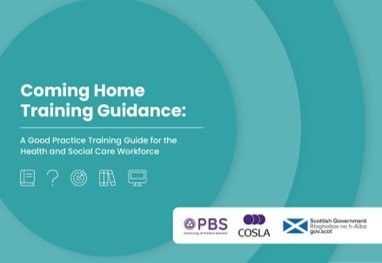
Earlier this month, our Head of Complex Care for Scotland, Nadia Khan, joined The Positive Behaviour Support (PBS) Community of Practice for Scotland for a webinar introducing the Scottish Government’s new ‘Coming Home Training Guidance’ for Scotland’s Health & Social Care Workforce.
Strengthening community services is a core ambition of the Scottish Government’s Coming Home agenda, and the new Good Practice Training Guide has been developed to support this national commitment.
In the following blog, Nadia shares her thoughts and reflections from the webinar:
“At its heart, the Coming Home training guidance challenges us all to move away from a focus on long-stay hospital settings and out-of-area placements, and instead ensure people can live ordinary, meaningful lives in homes they choose.
I was delighted to join The PBS Community of Practice for Scotland to share my insights and experiences on ‘enabling (or capable) environments’, and to explore why getting environments right is so fundamental to quality of life. It’s a topic I’m really passionate about, having explored it in depth within my own practice and research.
What do we mean by ‘capable environments’?
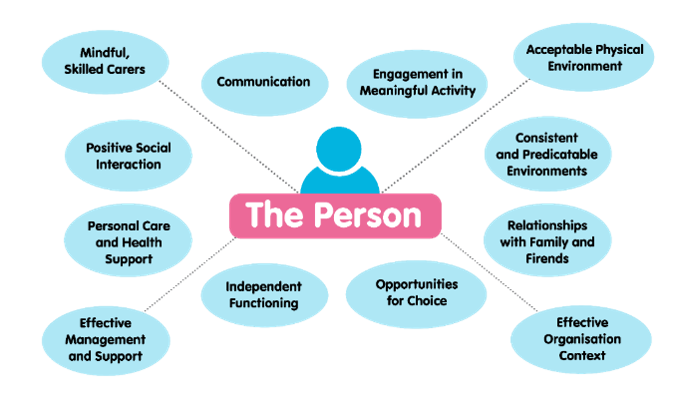
Capable environments are a structured, evidence-informed way of thinking about how we design and deliver support. They focus on getting the conditions around a person right so that they can thrive.
Research by McGill et. al. (2014 & 2020) identified 12 core characteristics that underpin a capable environment.
While varied in detail, they share two important outcomes:
- They lead to positive outcomes for people and those supporting them, such as enhanced quality of life
- They reduce the likelihood of behaviours that challenge by addressing needs
Put simply, capable environments help us create the conditions where people can succeed.
Why environments matter so much
One of the key messages I shared in the session is that behaviours described as ‘challenging’ don’t happen in isolation – they are often shaped by the environment around a person.
Too often, services have been designed in ways that unintentionally impact quality of life. For example:
- Environments that don’t meet sensory or personal needs
- Communication that isn’t tailored to the individual
- Limited opportunities for social interaction or meaningful activity
- Restricted access to preferred items or choices
When these factors are present, people are more likely to experience frustration, distress or disengagement.
On the flip side, when we design environments that fit the person, rather than expecting the person to fit the environment, we create the foundations for a good quality of life.
Supporting people to “come home”
This is where capable environments connect directly to the Coming Home agenda.
If we want people to successfully transition from hospital or out-of-area placements back into their communities, we need more than just a change of location. We need to ensure that the environment they are moving into is truly set up to support them.
That means:
- Designing support around the person’s unique needs, preferences and communication style
- Creating opportunities for meaningful activity, relationships and choice
- Ensuring teams are supported to deliver consistent, high-quality care
When these elements are in place, community-based living becomes not only possible, but sustainable.
How to get started
In the webinar, I shared some simple ways organisations and teams can begin to embed capable environments into their practice.
A good starting point is to take a step back and assess the current environment, alongside the teams providing direct support. One practical tool is the Capable Environments Appraisal Tool, which helps teams reflect on the 12 characteristics and identify opportunities to enhance the environment to better meet the person’s needs.
From there, the focus should be on:
- Working collaboratively across teams to identify priorities
- Building small, achievable changes into everyday practice
- Embedding a culture of reflection and continuous improvement
Importantly, this isn’t about quick fixes, it’s about creating the right conditions over time, with consistency and shared understanding.
Continuing the conversation
The webinar was part of a wider programme that brings together learning on topics such as trauma-informed care, commissioning and workforce development – all designed to support the Scottish Government’s Coming Home agenda.
If you’re interested in learning more, the Coming Home Training Guidance provides a useful starting point. It signposts to a range of free resources and learning opportunities to help teams build their knowledge and skills.
Enabling people to live meaningful lives
As a sector, we have a real opportunity to rethink how we design support – moving away from restrictive or reactive models and towards environments that enable people to live full, meaningful lives.
Creating capable environments isn’t an ‘add-on’ – it’s fundamental to delivering good support.
When we get the environment right, we reduce the need for restrictive practices, improve outcomes and most importantly, ensure people have the opportunity to live the lives they choose.”
Our latest news
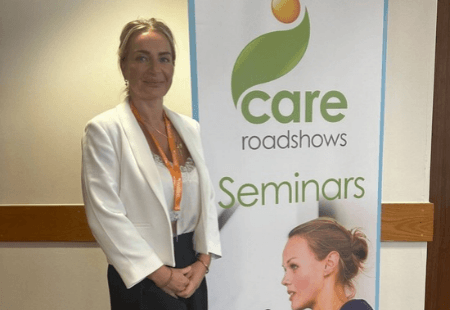
Olivea Shares Insights at Care Roadshow South
We’re Shortlisted for 16 Great British Care Awards
Our response to ‘The State of the Adult Social Care Sector’ report

Sara Murphy Wins Care Leadership Award

We Meet With Shadow Health Secretary

What To Do Celebrates Black History Month Through Music
Trustees Visit William Gibbs Court Services
Proudly Celebrating 10 Years of Support in the Highlands
Best Lives, Bolder In Action At Labour Party Conference
Our Leaders Recognised in National Social Care Awards